|
The Ribble Link |
 |
When John Rennie built the
Lancaster Canal in 1793, he could never have dreamt it would take more than 200
years to complete it. Nearly 210 years after the canal was begun the Ribble
Link was opened. When the Lancaster Canal was designed, it was to transport
goods between Wigan in the South, and Kendal in the North.
Two large
aqueducts were designed, one over the River Lune in Lancaster, and one over the
River Ribble in Preston. Unfortunately, the company ran out of money for the
Ribble aqueduct and built a temporary horse drawn tramway through Preston
instead. This worked fine, transporting boats across preston and so the Ribble
aqueduct was never built. |
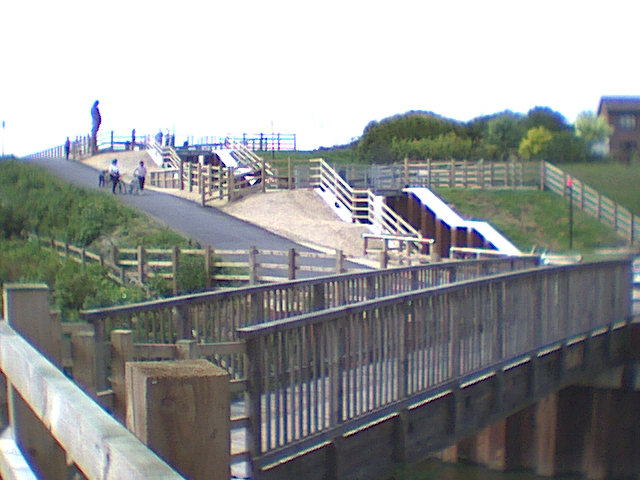
Lock Overview |
The idea was never really
forgotten though, a group of enthusiasts got together in the 1980's and drew up
a plan to '"canalise" the Savick Brook, to link the Lancaster Canal into the
Ribble Estuary and from there to the Leeds Liverpool Canal, via Tarlton on the
River Douglas.This group was the Ribble Link Trust, and the rest is history.
They were helped by, amongst lots of others, The Lancashire Count Council,
The Millenium Commission, British waterways and The Waterways Trust. Over the
years, a lot of people work hard to get the Lancaster Canal connected to the
main canal network using a Ribble Link. Now it's is a reality. |
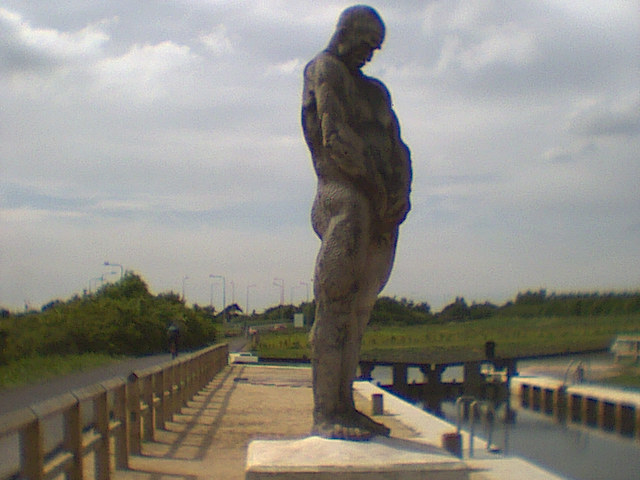
The Wooden Statue |
The Ribble Link follows the line
of Savick Brook, with some of it's water coming from the Lancaster Canal
itself. The staircase lock, made up of three actual locks, is nine meters tall,
boats travelling up, or down, three meters at a time. The other locks along the
link look more traditional but they are a bit different. Instead of using
stone, steel piles were used, the gates made mainly of steel instead of oak.
Lock nine is a sort of a version of the Thames Barrier. It is called a
"rising sector gate" and rotates to hold the water in when the tide is going
out. Because the Ribble Link itself is a natural waterway, based on the Savick
brook, it meanders on it's original path. In some areas, other than maintaining
the depth suitable for boats, banks on one side were dug out to increase the
width. |
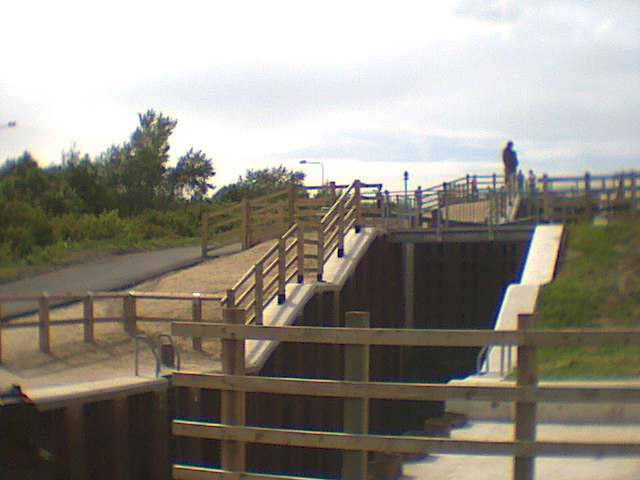
Lock One |
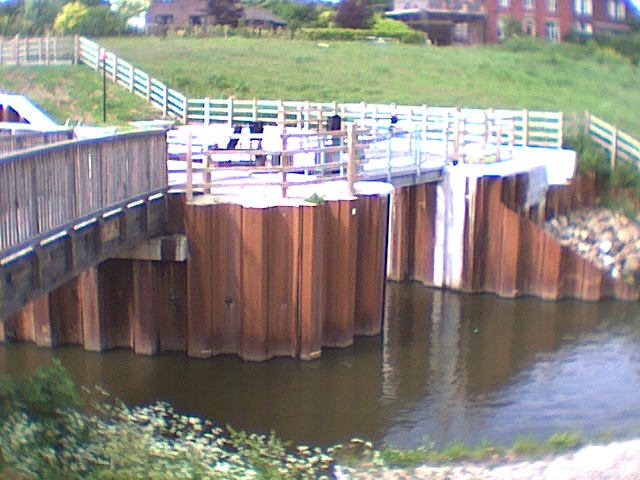
Lower Lock Basin |
Site Hosted by
Alucard Inchoate Ltd |
|
